

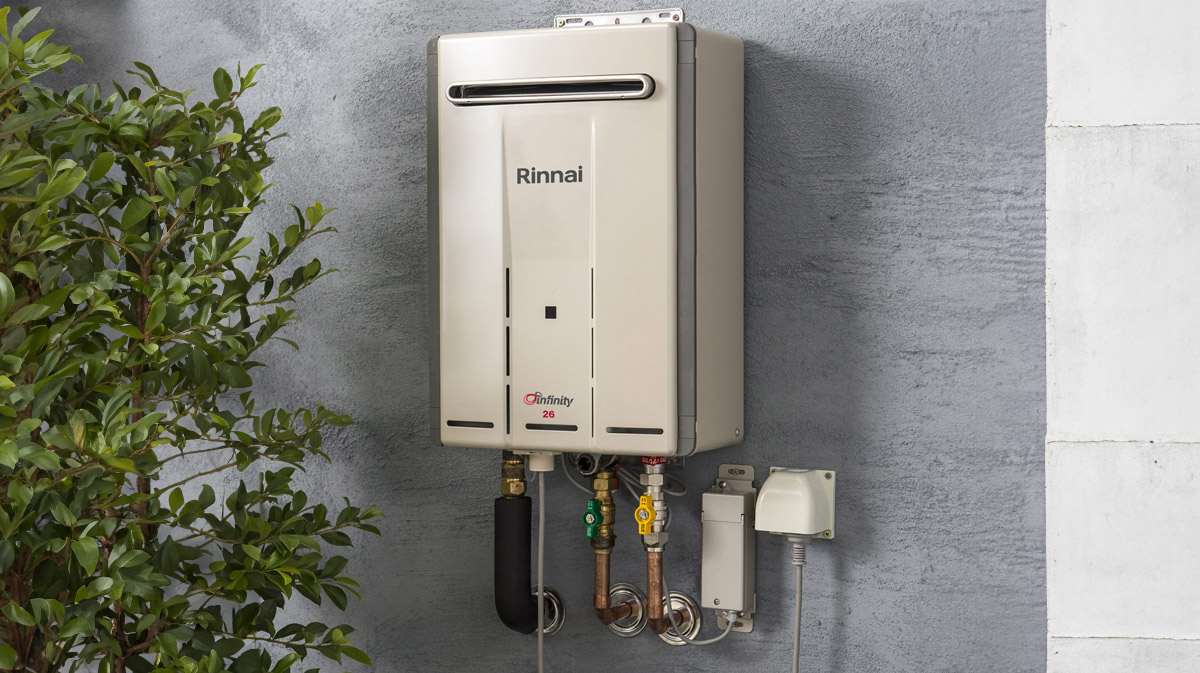

A family of four generally needs a 270 to 315 litre heat pump, a 250 to 315 litre electric storage tank on an off-peak tariff, a 135 to 170 litre gas storage tank, or a continuous flow unit rated at 20 to 26 litres per minute. In Canberra, most families are best served by a 270 to 315 litre heat pump that’s rated for sub-zero nights, because new gas connections have been banned in the ACT since December 2023 and heat pumps have the lowest running costs here.
Size is important. Getting it right is the first thing we look at on every hot water installation job, because if the tank is too small there isn’t enough hot water to go around, and if it’s too large, both the purchase price and the ongoing running costs go up. There is no single answer to what size a family of four needs. It will depend on the type of system you choose, how your family actually uses hot water, whether you’re on an off-peak tariff, and in Canberra, how well the system copes with freezing winter conditions. This guide covers each of those, along with the sizes we’d recommend and the local rebates that can help with the cost.
Key takeaways
- A family of four uses approximately 200 litres of hot water a day, so storage tanks for four people typically range from 250 to 315 litres.
- Heat pumps require larger tanks than gas because they don’t heat water as rapidly, which is why 270 to 315 litre tanks are generally recommended for four people.
- In Canberra, check the heat pump’s minimum operating temperature. Models rated to around -10°C handle our coldest nights far better than many standard units.
- Continuous flow units are measured by flow rate, and a house with two bathrooms generally needs at least 26 litres per minute.
- ACT rebates and loans can offset a good part of the cost of a heat pump, although you’ll normally need approval before the system is installed.
How much hot water does a family of four use?
A general rule of thumb is that each person uses approximately 50 litres of hot water per day, and Solar Victoria recommends that a storage system holds around one and a half days’ worth. For four people, this works out to roughly 200 litres per day and a tank of about 300 litres. Long showers, daily baths, older children, or a teenager who treats the shower like a second bedroom will all increase this amount, while water-saving showerheads and shorter showers will bring it down.
Hot water system size guide for a family of 4
The correct tank size also depends on how each type of system heats water. Gas heats rapidly, so smaller tanks are adequate, whereas heat pumps and off-peak electric systems take longer to heat or only operate at set times, and therefore need larger tanks. Below are the typical sizes for a family of four, together with how well each option suits a Canberra home. If you’re weighing up 250 against 315 litres specifically, our guide on whether a 250L hot water system is enough works through the shower maths in more detail.
| System type | Family of 4 size | What it depends on | Canberra fit |
|---|---|---|---|
| Heat pump | 270–315L | Slower recovery, so size for the whole day | Best running costs. Choose a cold-rated model |
| Electric storage (off-peak) | 250–315L | Heats overnight, so the tank must last all day | Cheap to buy, most expensive to run |
| Electric storage (continuous tariff) | 125–160L | Reheats during the day as you use it | Rarely the best value here |
| Gas storage | 135–170L | Gas reheats quickly, so a smaller tank works | Only if you already have gas |
| Gas continuous flow | 20–26 L/min | How many showers and taps run at once | Only if you already have gas |
| Solar (evacuated tube) | 300–360L | Roof space and orientation | Works, but heat pumps usually cost less to run |
Why heat pumps need a bigger tank
A heat pump operates a bit like a refrigerator in reverse, extracting heat from the surrounding air and transferring it to the water. They are very efficient, but slow. For instance, Dux states that its 270 litre Pro-Series can heat up to 77 litres an hour using only the heat pump, so it takes approximately three and a half hours to heat a full tank, whereas a gas system is much quicker. Because of this slower recovery, a heat pump for a family of four should hold enough hot water to cover both the morning and evening rush without relying on a rapid top-up, which is why 270 to 315 litres is the most common recommendation.
If a family is choosing between two sizes, we tend to suggest going up rather than down. Children become teenagers, visitors come to stay, and a heat pump that’s slightly undersized will use its electric booster element a lot more often, wiping out a good portion of the savings you chose it for in the first place.
Heat pumps and Canberra winters
Winters in Canberra create problems for heat pumps that most other capital cities don’t have to deal with. Temperatures here regularly fall below -5°C overnight, and a heat pump that wasn’t designed for those conditions will switch to its backup electric element, which costs roughly as much to run as an old electric tank. The ACT Government notes that a good quality heat pump can still run efficiently at temperatures as low as -10°C, but that very much depends on the model.
CO2 heat pumps like the Sanden Eco Plus and Reclaim Energy are rated to work at temperatures as low as -10°C, which makes them our preferred option for Canberra homes. Many less expensive R290 units are rated somewhere between -5°C and -7°C. These cheaper options can still perform adequately, particularly if they’re set to heat during the warmer part of the day or while your solar panels are generating, but please confirm the lowest operating temperature on the specification sheet before you buy. For a wider comparison of gas, electric and heat pumps, see our guide to the best hot water system for Canberra.
Sizing a continuous flow system for four people
Since continuous flow systems have no storage, they’re measured by the volume of hot water they can deliver at the same time. To work out how large your unit needs to be, add up the showers and taps you expect to be using at once. Running two water-efficient showers together uses approximately 18 litres per minute, and adding the kitchen tap brings that up to roughly 25 litres per minute.
| Outlet | Typical flow |
|---|---|
| Water-efficient (3 star) shower | 7–9 L/min |
| Standard shower | 8–12 L/min |
| Kitchen tap | 6–8 L/min |
| Bathroom basin | 4–6 L/min |
A 20 litre per minute unit will generally be enough for a family of four in a single bathroom home. However, where there are two bathrooms and two showers frequently run at the same time in the mornings, a 26 litre per minute unit is the better choice. Because these are gas units, they should only be considered for homes that are already connected to gas. Our guide to continuous flow hot water in Canberra includes a worked winter example showing how output drops when the incoming water is cold.
Can you still get gas hot water in Canberra?
You can still replace an existing gas hot water system with a newer gas unit, but the ban on new gas connections in the ACT came into effect in December 2023. Currently, there is no rule requiring owner-occupiers to replace a working gas system with an electric one at the end of its life, although the ACT Government has been consulting on regulations for gas appliances and the gas network is scheduled to be phased out by 2045. Gas network costs are also expected to keep rising, so for most households it makes more sense to switch to a heat pump than to buy another gas unit.
Running costs for a family of 4 in the ACT
According to the ACT Government’s Climate Choices guide, the yearly cost of heating a standard 300 litre tank is approximately $1,435 for an electric system, about $850 for gas and approximately $478 for a hot water heat pump. Over the ten or so years a typical system lasts, that adds up to a considerable saving.
Gas and standard electric units typically cost a lot less to install than heat pumps. The ACT Government puts a good quality heat pump at around $5,500 installed, while a standard electric or gas system costs roughly $1,800. It estimates that the higher upfront cost of a heat pump will pay for itself within approximately four to six years because of the lower running costs, and if the rebates and loans below are applied, that timeframe could be significantly shorter. For a breakdown of what should be included in a full quote, see our guide to hot water installation costs in Canberra.
Not sure what size you need?
Let us know the number of people in your household, the number of bathrooms and what you have currently, and we’ll advise you on the right size and type for your home before you commit to buying anything.
ACT rebates and loans for a new hot water system
The ACT offers some of the best assistance in the country for switching to a heat pump, and your family may qualify for more than one of the programs below when replacing an older electric or gas system.
- Home Energy Support Program rebate. Eligible homeowners, generally concession card holders who own and live in their home, may receive 50% of the cost of a new heat pump hot water system back, up to $2,500.
- Sustainable Household Scheme loan. Low-interest loans are available for hot water heat pumps and other energy-efficient upgrades, and the loan limit is $20,000 for new applicants from 1 July 2026.
- Small-scale technology certificates (STCs). The majority of heat pumps are eligible for STCs, and your supplier or installer will typically take their value off your final invoice.
Check before installation. These programs have rules about eligible products, approved suppliers and the timing of applications. For the ACT rebate, for example, the heat pump model must be listed on the Victorian Energy Upgrades register. Confirming eligibility before your current system is removed means you won’t miss out. Our guide to hot water rebates in Canberra covers approval timing and how to avoid double counting incentives in more detail.
Hot water systems that suit a family of 4
Here are some examples of systems in the right size range for a family of four, with prices at the time of writing. They’re a starting point rather than a recommendation for every home, and whatever you choose needs to be installed by a licensed plumber, with the electrical connection done by a licensed electrician.
In addition to the examples above, Bunnings carries many other heat pumps and electric storage systems, while CO2 heat pumps and gas units are normally supplied through plumbing wholesalers such as Reece and Tradelink, or directly by your installer. Regardless of where you buy, make sure you check the warranty and the minimum operating temperature, and confirm the model qualifies for the ACT rebate before committing to a purchase. If you’re thinking of buying through Bunnings, our Bunnings hot water installation checklist covers what’s included and what to check before you order, and our Rinnai vs Rheem comparison may help if you’re torn between brands.
Sizing mistakes we see in Canberra homes
- Replacing like for like without thinking it through. A 160 litre tank that suited a couple ten years ago may not be anywhere near enough now that there are four of you, so it pays to size for the household you have today.
- Choosing a heat pump on efficiency alone. A more efficient system doesn’t necessarily recover any faster, and if the tank is on the small side it will end up leaning on its booster element whenever the house is busy.
- Forgetting about Canberra’s winters. A unit that’s only rated to around -5°C may struggle through our coldest nights, which unfortunately is exactly when everyone wants a long, hot shower.
- Not taking the tariff into account. Because an off-peak electric system only heats overnight, it needs a noticeably larger tank than the same household would need on a continuous tariff.
- Installing first and sorting out rebates afterwards. Some programs need approval before any work starts, so it’s well worth checking the requirements before the old system comes out.
Every winter we receive calls from families who find they don’t have enough hot water to get through the evening showers. Many of these involve either an undersized system or a heat pump that wasn’t designed for Canberra’s frosty conditions and has been relying on its backup element. Most of the time the solution is a properly sized replacement, and once the ACT rebates are taken into account, many homeowners find the cost very reasonable.
Ready to replace your hot water?
Local, licensed and upfront. Ethan handles all aspects of hot water installation, repairs and replacements across Canberra and surrounding suburbs, including Belconnen, Tuggeranong, Gungahlin, Woden and Queanbeyan, and can help you work out the correct size before anything is ordered.
Hot water sizing FAQs
Is a 250L hot water tank enough for a family of 4?
Usually, yes, especially with a gas system or an electric system on a continuous tariff. With a heat pump or an off-peak electric tank, 250 litres can be marginal if everyone showers in the morning, so 270 to 315 litres is generally the safer choice.
Is 315L too big for a family of 4?
Generally, no. A 315 litre tank gives most families of four a comfortable buffer, whether it’s a heat pump or an off-peak electric system, although it may be too large for a household that uses considerably less hot water than average.
What size heat pump does a family of 4 need?
The majority of families of four will need a heat pump with a 270 to 315 litre tank. For Canberra homes, it’s advisable to choose a model that works effectively at temperatures of around -10°C so it doesn’t rely on its electric booster through winter.
What size continuous flow hot water does a family of 4 need?
Approximately 20 litres per minute for a single bathroom home, or 26 litres per minute for a two bathroom home where showers regularly run at the same time.
What size gas hot water system for a family of 4?
A gas storage tank of approximately 135 to 170 litres typically suits a family of four, thanks to the rapid reheating of gas. In the ACT, this is only an option if your home already has a gas connection.
Do I need a bigger tank on an off-peak tariff?
Yes. Because an off-peak system only heats at night, the tank has to store enough hot water for the entire day. For four people, most will need 250 to 315 litres, compared with 125 to 160 litres on a continuous tariff.
How long does a hot water system last?
Most electric and gas storage systems last around 8 to 12 years, depending on water quality and maintenance. Routine servicing, such as checking the relief valve and the anode, will also help extend the life of your system. Our guide on how long hot water systems last explains when a repair is still worth it.
Can I still install gas hot water in Canberra?
Only if your home already has a gas connection. New gas connections have been banned in the ACT since December 2023 and the gas network is being phased out by 2045, so most families replacing their current system now opt for a heat pump instead.
- ACT Climate Choices: A guide to hot water heat pumps (running costs, upfront costs, payback)
- ACT Climate Choices: Hot water
- ACT Climate Choices: Home Energy Support rebates
- ACT Climate Choices: Sustainable Household Scheme
- Solar Victoria: Deciding your hot water system size (50 L per person, 1.5 days storage)
- YourHome (Australian Government): Hot water systems
- Energy Matters: The ACT gas phase-out
- CHOICE product listings, Bunnings and Tradelink product pages, prices checked November 2026
- Born Plumbing on-site experience, Canberra and Queanbeyan