

How Long Do Hot Water Systems Last?

How long does a hot water system really last?

Typical hot Water system lifespan ranges from 8 to 20 years depending on factors such as what type of system you have, the type of Tank materials, your Water usage, and how much maintenance you do.

Want the experts to handle it?

Our Canberra team of plumbers can take a look at your current hot water system and specify whether it can be repaired or if you require a replacement.

What determines your hot water system’s lifespan?

Hot Water systems are made to last. While there are some average lifespans of hot Water systems based on the number of hours a year they operate (based on 5 showers/day), the actual lifespan will vary greatly by how well the system was installed and how well it is serviced/maintained.

Average lifespan of different types of hot water systems

Here are the typical average lifespans of different types of hot water systems:

System typeAverage lifespanMost common failure pointsReason
Storage-type hot Water systemsaverage lifespan = 8-12 yearsmost common failure points = Tank, valves, thermostats, heating elements, anodes, and fittings.reason for shorter lifespan = all parts of these systems are subjected to constant hot and cool temperatures which cause corrosion, etc.
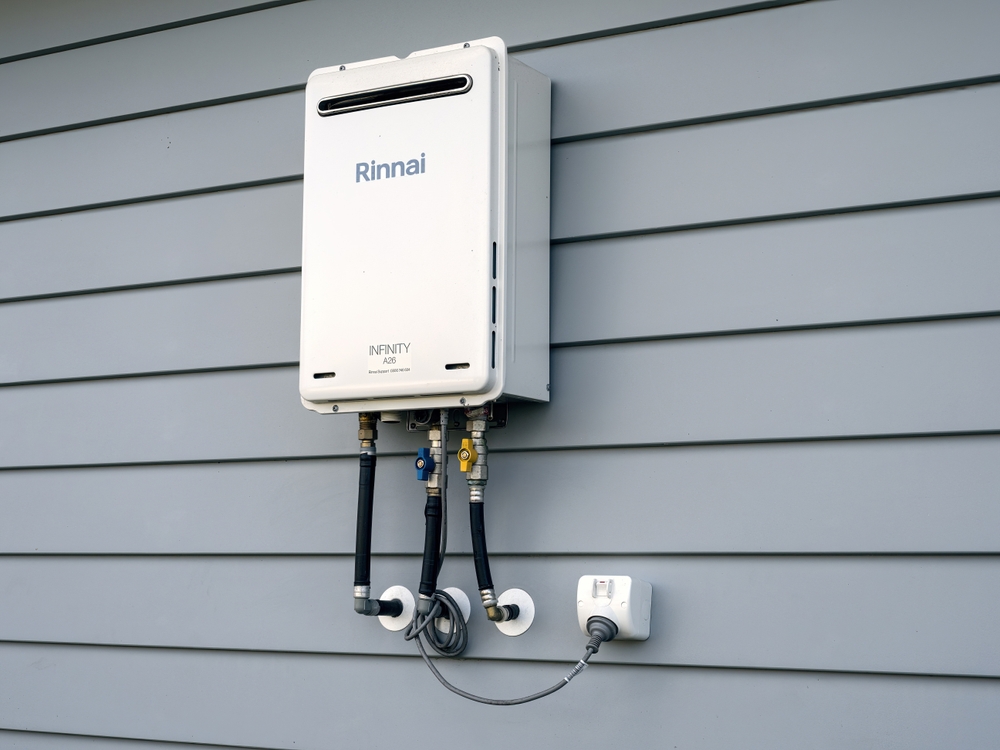
Continuous Flow type hot Water systemsaverage lifespan = 15-20 yearsmost common failure points = heating exchangers, ignitions, Burners, Sensors, controllers, etc.reason for longer lifespan = since these systems do not store Water, the biggest problem with them is the degradation of the heating exchanger or other mechanical parts.
Heat pump type hot Water systemsaverage lifespan = 10-15 yearsmost common failure points = compressors, fans, evaporators, Sensors, printed circuit boards, electronic controls, tanks and valves.reason for longevity of parts is similar to that in Continuous Flow units; however, since they require refrigerants to function and use more electrical energy than Continuous Flow units, they are generally less reliable.
Solar hot Water systemsaverage lifespan = 15-25 years +most common failure points = tanks, pumps, collectors, Sensors, valves and roof mounted equipment.reason for longevity of parts is similar to that in Continuous Flow units; however, since they provide most of their own energy from the sun, they are typically very reliable and durable.

How long do electric hot Water systems last?

Typically, an electric hot Water system lasts anywhere from 8-12 years. An electric hot Water system has three major parts: a Tank to hold the hot Water, heating elements to warm the water, and a thermostat to regulate the temperature. The part that determines how long this type of system will last is the Tank.

All electric hot Water systems use either a glass lined or enamel coated steel Tank. Both types of tanks utilize a sacrificial anode to protect against internal corrosion of the Tank. When the anode wears out, the Tank begins to deteriorate from corrosion.

When to replace an electric hot Water system

If your electric hot Water system is leaking, then it should probably be replaced. If your system is under eight years old and failing due to faulty wiring, thermostats, valves or heating elements then repairing the system is likely to make sense. Leaks in tanks however usually indicate significant deterioration of the Tank and replacement is almost always the best solution.

How long do Gas hot Water systems last?

Typically a Gas hot Water system lasts anywhere from 8-12 years. Like an electric hot Water system, a Gas hot Water system uses a Tank to hold the hot Water and heating elements to warm the water. But unlike an electric hot water system, Gas hot Water systems use a Gas flame to Heat the Water. So instead of using heating elements like those found in electric systems, Gas systems use a burner to heat the Water.

There are several reasons why Gas hot Water systems may fail. These include:

  • Tank corrosion: this is similar to electric systems and occurs when the sacrificial anode wears out and stops protecting the Tank.
  • Ignition problems: these occur when there are problems with Pilot lights, Ignition modules or electronic Ignition systems.
  • burner problems: these occur when the burner is clogged, dirty or simply worn out.
  • Gas control valve problems: these occur when there are leaks in the valve or when it gets clogged or dirty.
  • Relief valve failure: this occurs when pressure builds up too high in the system and blows off.
  • ventilation or flue issues: these occur when flues become clogged or damaged.
  • age: as with all appliances, older systems tend to break down more frequently.

Replacing a Gas hot Water system

While some problems with a Gas hot water system can be repaired by a licensed plumber, others may require replacement. Typically, if the leak comes from the tank, then it should be replaced. If your system is experiencing difficulties turning on or maintaining heat, then it should be inspected by a licensed plumber who specializes in Gas appliances.

How long Do Instantaneous (Continuous Flow) Gas hot Water Systems Last?

Typically instantaneous (Continuous Flow) Gas hot Water systems last anywhere from 15-20 years. Unlike traditional tank style hot Water systems that store gallons of heated Water until needed, instantaneous (or Continuous Flow) systems produce heated Water directly from unheated mains supply when turned on. Since they do not require storing gallons of heated Water in a Tank all day long they have fewer areas prone to corrosion and therefore tend to last longer than traditional Tank-style systems.

However, while Continuous Flow systems do not suffer from corrosion as much as traditional tank-style systems they do suffer from wearing out. Wearing out is common among all appliance parts regardless of type.

Parts that commonly wear out on Continuous Flow systems include:

  • Heat exchanger
  • Burners
  • Ignition components
  • Flow Sensors
  • Gas valves
  • Water valves
  • printed circuit boards
  • electronic controllers

Since Continuous Flow systems are generally larger than traditional Tank-style systems they tend to consume more energy during peak periods. Therefore sizing these units properly is important to prevent shortening their lifespan.

Sizing properly

Unlike traditional Tank-style units which are measured in liters or gallons (to determine capacity), Continuous Flow units measure in liters/minute (lit/min).

For example a single person might only need 17 lit/min of Continuous Flow whereas a family of five could potentially need upwards of 30 lit/min.

Why Hot Water Systems Fail Early

Hot Water systems do not fail because they were poorly designed; many fail early due to poor design (sizing), poor Installation, poor Water quality, poor maintenance, etc.

The most common causes of premature failures are:

  • The system was improperly sized from the beginning
  • The sacrificial anode was never inspected or replaced
  • The relief valve has been leaking for an extended period of Time
  • The tank was located outside in poor weather conditions
  • The system was installed in an improper location
  • The piping leading to/from the unit was not properly insulated.
  • The house size/occupancy changed and/or the hot Water usage increased
  • The system was operating under peak load continuously
  • smaller leaks were ignored and went unnoticed.
  • Poor water quality shortened the service life of the tank.

A 160L electric storage tank will probably be sufficient for a couple’s hot Water needs. However, this same tank may be severely challenged by a family of four living in the same home.

A continuous flow unit may technically be functioning well, but it could also be providing subpar performance if it was never sized for two or more bathrooms.

Although a Heat pump may appear to be very efficient on paper, a poorly placed Heat pump can be much louder, colder, and longer to recover from a low temperature operation compared to other types of units.

Installation matters more than most people think:

Signs your hot water System is close to reaching the end of its life

There are several ways to identify when a hot Water System is nearing the End of its operational life.

The most important indicator is age plus previous faulty operations. one repair to a young hot Water System is normal. Multiple repairs to a 12 year old storage tank indicates it is getting close to the End.

Look for these indicators:

1. brown/Rusty Water

  • This color of Water indicates there is corrosion occurring within either the hot Water tank itself or the piping leading to/from the unit. If the source of the Rusty Water is identified as being caused by a problem with the hot Water tank, it may indicate the hot Water tank is ready to fail.

2. leakage from the storage tank

  • a leak from a storage tank typically requires replacement of the entire tank. A leak from a valve or fitting typically can be repaired.

3. faster depletion of hot Water than expected

Causes for faster depletion of hot Water than expected include:

  • failed elements
  • faulty thermostats
  • sediment accumulation within the storage tank
  • improperly sized System
  • the hot Water System approaching or exceeding the End of its service life.

4. continuous leaks from the Relief valve

  • The relief valve prevents excessive pressure from building up within the System. Continuous leakage from the Relief valve indicates a problem exists within the System such as a high pressure situation, a faulty valve, etc.

5. New sounds emitted by the System

  • banging, hissing, rumbeling, boiling type noises emitted by the System may indicate sediment build-up, high pressure issues, overheating, or other equipment malfunction.

6. More than ten years old

  • age alone is not necessarily an indication that a System should be replaced. Age combined with faulty operation is another story!

7. increased utility costs (electricity/Gas)

  • as a hot Water System ages, it will require more energy to provide the same amount of hot Water as it did in its earlier days. A solar or Heat pump System that has a faulty component may continue to produce some level of hot Water using its backup method (booster) however, operating costs may significantly increase.

8. Inconsistent temperatures at taps

Consistent variations in Water temperatures at faucets/taps may indicate:

  • failing thermostatic valves or thermostats
  • Gas valve control issue
  • flow sensor malfunction
  • sizing issue related to continuous flow units

when to repair vs. Replace your aging hot Water System

The decision to repair vs. replace an aging hot Water System depends on how old the unit is.

less than eight years old

Repairing older hot Water systems usually makes more sense if the tank itself appears sound.

Common repairable faults include:

  • thermostat Failure
  • Element Failure
  • Relief valve Failure
  • Tempering valve Failure
  • Ignition problem
  • fitting leak

However, if the tank leaks, age is irrelevant. A leaking tank usually means it’s Time to consider replacing it.

Between eight and ten years old

This is where things become gray.

If you’ve got one relatively inexpensive repair that would buy you perhaps one or two years of additional life out of your hot Water System, repairing it may make sense. However, if you’re facing a costly repair that represents a significant portion of what you’d pay for a new System, it may be better to just bite the bullet and replace it now.

Some factors to ask yourself when deciding whether to repair or replace your hot Water System include:

  • does your tank show Signs of rust?
  • has your tank had numerous previous failures?
  • was your original hot Water System appropriately sized for your home?
  • are spare parts readily available for your System?
  • will replacing your System with something new ultimately save you money on operating costs?
  • is your current System safe and compliant with all applicable regulations?

If repairing your hot Water System will only give you one or two extra years of service life, you may find that spending money repeatedly on repairs amounts to “false economy”. Ultimately, you’ll still End up having to replace your System anyway.

For continuous flow systems, the age threshold is somewhat different. While a ten-year-old continuous flow unit may still have some useful life left in it, this will depend on the condition of both its Heat exchanger and electronic components.

Making your hot Water System last longer

You can’t make a poorly installed System work better by performing regular maintenance. However, you can prevent a properly installed System from prematurely failing by taking care of it.

Check/replace sacrificial anode on storage tanks

All storage tanks fitted with sacrificial anodes require routine inspections/repairs/replacements of those anodes. The anode serves to protect the tank from corrosion.

If you ignore this task and allow the anode to degrade beyond usefulness, it won’t be long before the tank begins corroding itself.

Address leaky valves immediately

A continually leaking Relief valve results in wasted Water and may indicate a pressure issue or faulty valve(s).

Repair the issue immediately.

Keep your System at optimal operating temperature

Storage-type hot Water systems require minimum temperatures of 60c degrees to minimize legionella growth. Once delivered to taps, delivery temperatures are regulated by separate temperature regulating devices known as tempering valves.

Don’t lower your storage tank temperature to try and conserve energy as this creates a public health hazard!

Insulate any external piping leading to/from your hot Water unit

Pipes carrying external hot Water lose their Heat. In colder environments, this loss is even more apparent.

Insulating your exposed piping reduces Heat loss between your unit and tap outlets.

Design the System to meet future needs

When designing your hot Water System, ensure it meets the anticipated number of Occupants and future needs rather than simply meeting today’s requirements.

Hot Water systems normally last anywhere from ten to twenty years or more. Therefore, design your hot Water System based upon projected use patterns rather than current week-by-week patterns.

Regular maintenance of solar & Heat pump units

As mentioned previously, solar & Heat pump units contain multiple components including panels, pumps, sensors, fan assemblies, filters, compressors & control systems which all require periodic servicing. If one component fails, although some level of hot Water may still be provided via the boost function on some systems, overall efficiency will decline and higher utility bills will result.

Replacement prior to total Failure

If your hot Water System has reached an advanced age and is experiencing leaks, Failure history or marginal performance levels, don’t delay replacing it until complete Failure occurs.

Planned replacements offer greater flexibility. Emergency replacements usually limit you to selecting whatever options are available quickly.

Impact of lifespan on Canberra Homes

Homes located in Canberra experience harsher cold winters/frosty mornings/lower ambient Water inlet temperatures than other locations across Australia. As such, when trying to raise cold Water temperatures to deliver warm/hot showers during winter months, your System has more work to do compared to warmer regions.

Therefore, this affects:

  • older storage type units
  • units which are undersized
  • incorrectly sited Heat pumps for cold climate applications
  • poorly insulated outdoor storage units
  • long runs of un-insulated piping connecting unit and bathroom
  • households with multiple simultaneous shower users

Is it better to replace a hot water system during the winter months or outside of them?

Winter is when the system will typically reveal if it is already weak. Winter also reveals how poorly a system was designed for cold mornings.

What’s the Best Time to Buy a New Hot Water System?

The best time to purchase a new hot water system is when it is still operational. Most people don’t purchase a new system until they have no hot water.

Replacing a system while it is still functioning allows you to research and select from a wider variety of options including:

  • Electric storage
  • Gas storage
  • Gas continuous flow
  • Heat pump
  • Solar
  • Size of tank
  • Manufacturer/brand
  • Warranty
  • Costs of operation
  • Location of the system

When replacing a system due to a malfunction (or “emergency”) there are fewer alternatives. Your primary concern should be getting hot water restored quickly. In many cases this limits your selection to which system will fit in the current area of the house, connect to the current plumbing services, and what systems the suppliers currently have available.

As soon as your hot water system reaches ten years in age, consider having it inspected prior to winter. This way you can have a chance to determine whether you need to replace it before it breaks down entirely.

Frequently Asked Questions About How Long Hot Water Systems Will Last

How long does a typical hot water system last?

Typically, hot water systems last anywhere from eight to twenty years. On average, storage based systems tend to fall towards the shorter end of that spectrum. Some systems, such as those utilizing continuous flow technology, solar power, and certain types of heat pump technology can provide much greater longevity with proper installation and regular maintenance.

How long does an electric hot water system last?

On average, an electric-based storage hot water system will generally last around eight to twelve years. There are numerous factors that contribute to extending or shortening the lifespan of your tank and overall performance, including tank condition, anode maintenance, quality of the water used, and amount of use per day.

How long does a gas hot water system last?

On average, a gas-based storage hot water system will generally last approximately eight to twelve years. When comparing to their storage counterparts, instantaneous gas or continuous flow systems typically have longer lifespans ranging between fifteen and twenty years.

How long do instantaneous gas hot water systems last?

Generally speaking, instantaneous gas-based systems will last for approximately fifteen to twenty years. Since these units do not store heated water within a tank, each component such as heat exchangers, sensors, valves, burners, etc., has the potential to fail over time.

How long do heat pump based hot water systems last?

In general terms, heat pump based hot water systems will commonly last somewhere in the region of ten to fifteen years.

Factors influencing the longevity of these systems include:

  • Condition of the tank
  • Compressor
  • Fan(s)
  • Sensors
  • Location of installation

How long do solar based hot water systems last?

Generally, solar-based hot water systems can expect to last for anywhere between fifteen to twenty years or even longer. While the collectors themselves can last well beyond twenty years, components such as pumps, valves, boosters, sensors, and tanks require ongoing maintenance.

How long should a Rheem hot water system last?

Ultimately, it depends upon both the specific model number and/or type of Rheem hot water system installed. On average, Rheem electric or gas-based storage systems will generally last between eight to twelve years. However, continuous flow-type Rheem systems can potentially exceed that average. As always, warranty length, quality of incoming water, installation standards, and frequency of maintenance all play significant roles in determining overall lifespan.

Should I repair my 10-year-old hot water system or replace it?

Based solely on age alone, a ten-year-old storage based system will likely reach its end-of-life sooner rather than later. Therefore, if it is experiencing multiple failures throughout the year (leaks), has developed rust in either the tank itself or within the internal components, and/or simply produces less-than-desirable amounts of hot water under normal operating conditions; then it would probably be advisable to replace it now rather than trying to repair it.

On the other hand, if your storage-based system experiences only a single problem and the tank remains relatively clean and free of damage; then you might still find value in attempting to repair it.

How do I know if my 10+ year old hot water system needs to be replaced?

Some clear indications that your system is nearing or past its useful lifespan include:

  • Leaking tank
  • Water that appears rusty
  • Multiple recurring problems
  • Poorly recovering hot water
  • High operating costs
  • Age (over ten years)

Having a licensed professional evaluate your system will help you determine if the issue(s) you’re facing are easily correctable via repairs or if the entire unit is approaching or has reached its end-of-useful-lifespan.

How can I extend the lifespan of my existing hot water system?

To maximize the lifespan of your existing hot water system:

  • Replace the anode (as recommended by the manufacturer)
  • Repair any valve leaks immediately
  • Perform routine maintenance according to the manufacturer’s service recommendations
  • Wrap any exposed piping with insulation
  • Keep your system operating within safe temperature ranges
  • Consider replacing older systems (preventing catastrophic failure).

Need Help with an Older Hot Water System In Canberra?

If your system is over 10 years old, leaking, rusty, or no longer producing enough hot water, Born Plumbing can inspect, repair, or replace hot water systems in Canberra.

A quick inspection can tell you whether the system is worth repairing, or whether replacement is the smarter option.

Get A Quick Quote