

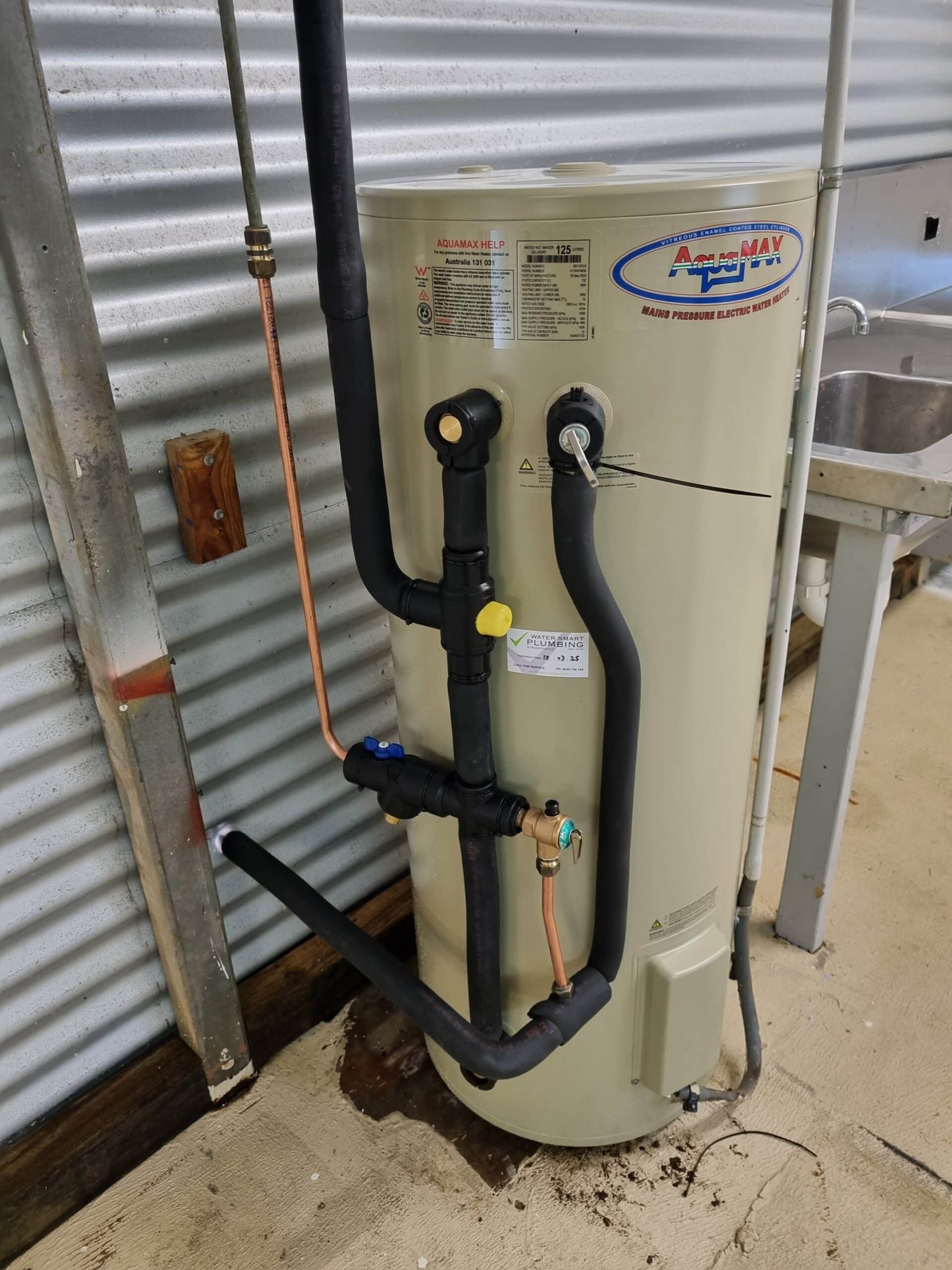

A hot water system can leak from a valve, a pipe connection or the cylinder itself. The first step is to find where the water is coming from. For hot water repairs and replacement in Canberra, call Born Plumbing and describe what you can see from a safe, dry position.
Updated 18 October 2026.
How to interpret the leak location
| Observed location | Possible explanation | Useful next step |
|---|---|---|
| Relief-valve drain | Expansion discharge or a valve/pressure fault | Report amount, timing and whether it continues |
| Threaded connection | Connection or nearby valve leak | Photograph from a dry, safe position |
| Tank casing or base | Cylinder leak or water tracking from elsewhere | Arrange assessment; do not assume the cylinder is repairable |
| Nearby floor only | A source elsewhere can track towards the heater | Describe other nearby appliances and pipework |
Rheem’s troubleshooting guidance distinguishes relief-valve discharge from other faults. Follow the guide for the exact heater and ask a plumber if you cannot identify the outlet safely. Never cap a relief drain to stop a leak.
How much water could a steady leak waste?
At a constant 0.1 litres per minute, a leak would waste 144 litres a day and 1,008 litres a week. The calculation is flow × 60 minutes × 24 hours; your leak may have a different rate or stop between heating cycles. Intermittent valve discharge during heating cannot be estimated as though it runs all day.
If water is near electrical parts, keep clear. For a large uncontrolled leak, use the property’s clearly identified water isolation only if it is safe and familiar; contact a plumber urgently. If you smell gas, leave the area and contact the gas emergency service from a safe place. Avoid opening covers, testing wet switches or dismantling safety valves.
Water from a relief drain
A relief valve can discharge during heating. The pattern matters: an occasional discharge and continuous flow are different observations. Note whether the water appears while the system heats, whether it stops, and whether the flow has changed recently.
Ongoing discharge needs assessment of the valve, pressure and system operation. It does not by itself establish that the cylinder has failed. Never block the drain to stop the water; it is part of the system’s safety arrangement.
Water around pipe connections or valves
A wet fitting can leave a puddle at the base of a healthy tank. Water can also track down the exterior, making the apparent source misleading. Tell your plumber where you first see moisture and whether it continues when the system is not heating.
A connection or valve fault may be repairable without replacing the water heater. The assessment should establish the source before recommending a whole new unit.
Water appearing from the tank body
A confirmed internal cylinder leak often changes the recommendation towards replacement. However, water around the base is not sufficient proof on its own. A plumber needs to distinguish cylinder failure from a leaking connection, condensation or another nearby water source.
Find the model and warranty information before approving replacement. Photograph the data plate if safely accessible. Our repair-or-replace guide explains how condition and repair history affect the decision.
What to tell the plumber
- Your suburb, contact details and whether the system still heats.
- The make, model, capacity and approximate installation age.
- Where water first appears and whether it is a drip or steady flow.
- Any error code or recent work on the system.
- Safe photos of the unit, label, leak area and access.
Do not delay contacting a plumber just to gather every detail. Describe what you can observe safely.
If the system needs replacement
Compare the installed scope, not just the new tank’s purchase price. Ask about removal, valves, connections and any electrical or gas work. Consider whether the old capacity still suits the household. See what a replacement quote should include and how to choose the right tank size.
Get the leak assessed in Canberra
Born Plumbing can assess gas and electric hot water faults and discuss repair or replacement. For hot water repairs and replacement in Canberra, call 0423 491 249. Explain the leak and check the earliest available visit.