

DIY Advice To Un-Clog Your Drain At Home
A blocked drain rarely happens at a convenient time. One minute the sink is draining fine, the next you’re standing in ankle-deep water wondering what you did wrong. Before you call a plumber, there are a few simple steps most Canberra homeowners can try themselves — and a few signs that tell you it’s time to stop DIY-ing and pick up the phone.
Here’s how to work out what you’re dealing with, the methods worth trying, and when a blockage is bigger than a bottle of drain cleaner can handle.
Step 1: Work Out What Kind of Blockage You Have
Before you touch a plunger, ask one question: is it just one drain, or several?
- One slow or blocked fixture (a single sink, shower or floor drain) usually means a local clog — hair, soap scum, food scraps or grease sitting close to the drain opening. This is the kind of blockage you can usually clear yourself.
- Multiple drains playing up at once — say a toilet gurgling when the washing machine empties, or several fixtures draining slowly at the same time — points to a blockage further down the line, closer to the main sewer. No amount of plunging one sink will fix that.
In some of Canberra’s older suburbs, ageing clay pipework and established gum trees add another layer to this — tree roots can find their way into a joint and cause repeat blockages that look like a simple clog but aren’t.
Signs You’ve Got a Blocked Drain
- Water draining slowly, or not at all
- Gurgling sounds from other fixtures when you run water
- Bad smells coming from the drain
- Water pooling around outdoor drains or gully traps
- Water backing up into a sink, shower or floor waste
DIY Methods to Try First
Work through these from gentlest to most aggressive. Stop as soon as the drain runs clear.
1. Boiling Water
Often the simplest fix for grease or soap-based clogs. Boil a kettle, let it sit for a minute or two off the heat (boiling water straight from the stove can warp plastic pipes), then pour it slowly down the drain in two or three stages.
2. Baking Soda and Vinegar
Pour around half a cup of baking soda down the drain, followed by half a cup of white vinegar. Plug the drain and leave it for 20–30 minutes while it fizzes, then flush with hot water. This is safe on pipes and works well on lighter grease and soap build-up.
3. The Plunger
For sinks, baths and showers, make sure there’s enough water in the basin to cover the plunger cup, block off any overflow hole with a wet cloth so you’re not just pushing air around, then pump firmly several times before pulling up sharply.
4. Wire Coat Hanger or Drain Snake
Straighten a wire coat hanger and bend a small hook in one end, or use a drain snake if you have one. Remove the drain cover and fish out any hair or debris sitting near the surface. This clears a large share of shower and bathroom drain blockages on its own.
5. Chemical Drain Cleaners (Last Resort)
Chemical cleaners can help with stubborn grease, but they’re harsh on pipes, fixtures and the environment, and dangerous if they splash back. Follow the product instructions closely, and never combine one with a plunger straight after — trapped chemicals can spray back out.
What Not to Do
- Don’t keep flushing a blocked toilet hoping it will clear — it usually just risks overflow.
- Don’t mix different chemical cleaners together.
- Don’t use excessive force with a drain snake if you feel resistance — you can damage the pipe.
- Don’t ignore a recurring blockage in the same spot — it’s usually a sign of a deeper problem, not bad luck.
Blocked Toilet or Blocked Sink? A Slightly Different Approach
Toilets and sinks each have their own quirks — different trap shapes, different everyday causes (wipes and sanitary products versus food scraps and grease), and different tools that work best. If that’s what you’re dealing with, our dedicated guides go into more detail:
Outdoor and Stormwater Drains
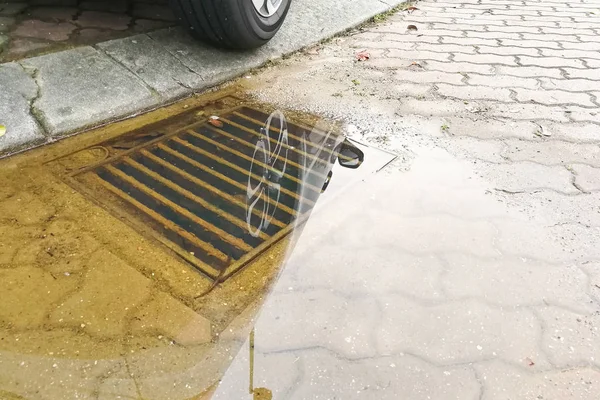
Outdoor drains block for different reasons — leaves, dirt and general debris rather than grease or hair. If you’ve got established trees nearby, root intrusion is also common in older Canberra properties. For minor blockages, clearing visible debris from the grate and flushing with a hose is often enough. For anything deeper, or if water is pooling every time it rains, it’s worth getting a professional to take a look before it causes damage.
When DIY Won’t Cut It — Call a Plumber
It’s time to stop and call a professional if:
- The blockage keeps coming back in the same drain
- Multiple fixtures are affected at once
- You can hear gurgling from drains you’re not even using
- Water is backing up rather than draining away
- You suspect tree roots or damaged, ageing pipework
Repeated or ignored blockages can lead to bigger problems — burst pipes, water damage, and costly repairs down the track.
If you’ve worked through the DIY steps and the drain still isn’t playing ball, Born Plumbing can find the cause and clear it properly, using the right equipment for the job — whether that’s a drain machine, high-pressure jetting or a CCTV drain camera. Give Ethan a call for fast, reliable blocked drain help across Canberra.